
A CLOSER LOOK
Dependence Doesn't Always Mean What We Think It Means.
Understanding what happens when the body adapts
You take something regularly. Maybe it's a medication you need. Maybe it's caffeine, nicotine, alcohol or another substance that's become part of your routine.
Over time, your body can get used to having it there. And if you suddenly take less or stop, your body may notice. That can be physical dependence. And here's the part many of us were never taught:
Physical dependence and substance use disorder are not the same thing.
UNDERSTANDING
What Happens When Your Body Gets Used to Something?
Our Bodies are built to adapt
When a substance is present regularly, the body can adjust to having it there. With some substances, that adaptation can mean needing more to get the same effect or feeling different when the substance is reduced or no longer there.
That's physical dependence.
It can happen with some prescription medications as well as other substances. And it can happen without someone having a substance use disorder.
KEY THINGS TO KNOW
The body adjusts to what is regularly there.
Physical dependence develops through repeated exposure. The body adapts to the presence of a substance and begins functioning with that substance as part of what it expects.
Dependence and substance use disorder tell us different things.
Physical dependence tells us that the body has adapted. Substance use disorder is a clinical diagnosis involving a broader pattern of symptoms. One does not automatically mean the other.
Sometimes changes are obvious and sometimes they are surprisingly easy to mistake for something else.
What happens when something changes can tell us more.
When the amount of a substance is reduced, or the substance is stopped, the body may respond. Those effects can be a clue that physical dependence has developed.
HERE IS WHAT MAKES IT EASY TO MISS
Sometimes it doesn't feel like withdrawal.
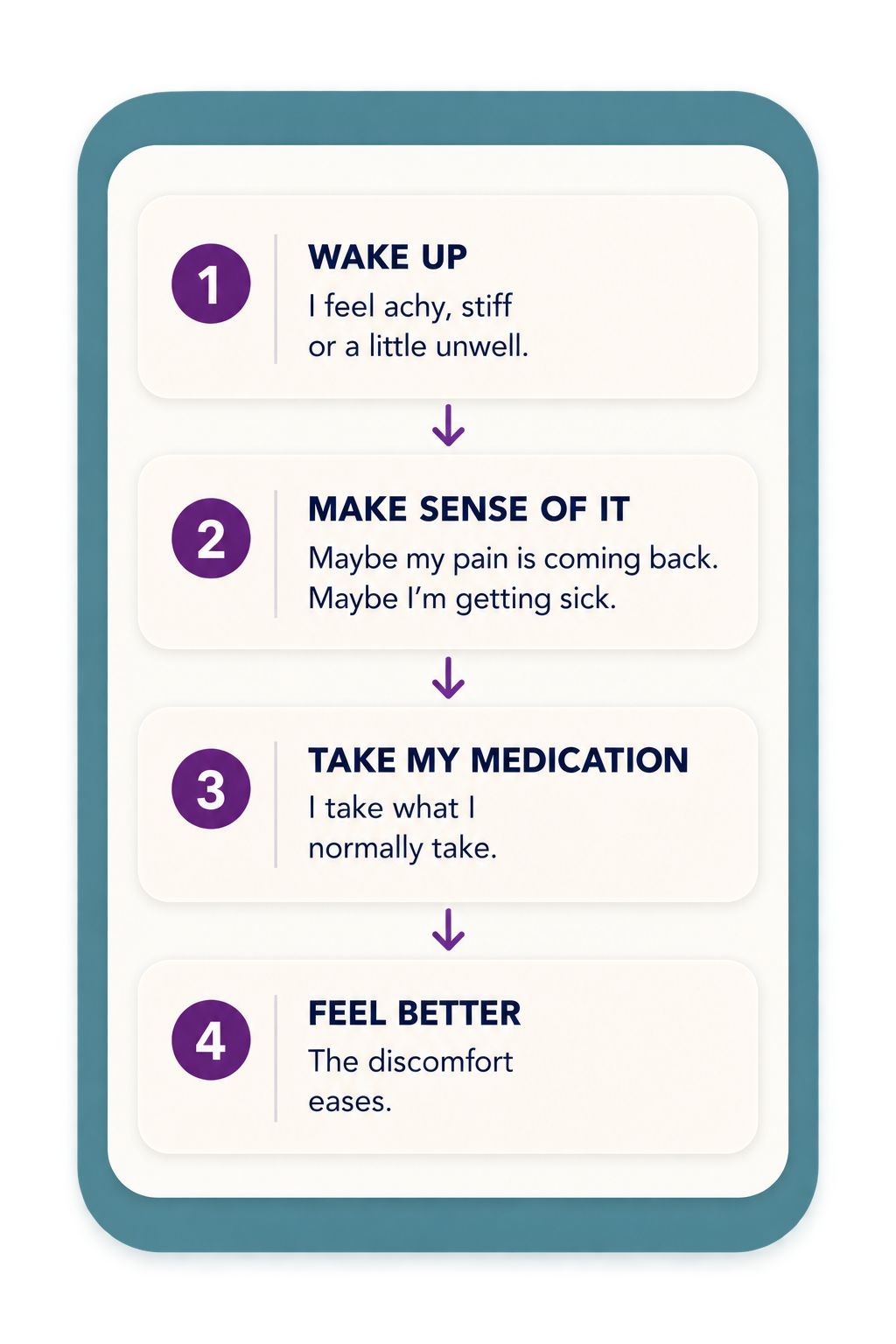
Dr. Kelly Dunn describes people taking prescription pain medication who wake up feeling a little achy, stiff or unwell.
They may think their pain is returning. Or that they're coming down with something.
Then they take their medication and feel better.
What they may not realize is that their body has adapted to the medication, and some of what they're feeling may be withdrawal.
The body can be adapting before we recognize what we
are feeling.
What might be easy to miss
The medication may be doing two things at the same time.
It may be helping with the original pain and if the body has become physically dependent, taking it may be also relieve early withdraw

FROM THE EXPERTS
Dr. Kelly Dunn points to this exact situation when explaining why physical dependence can be difficult to recognize. Someone taking prescription opioids for pain may wake up feeling a little sick or achy and assume it is simply their usual pain. Taking the medication makes them feel better, without them realizing that some of what they were feeling may have been withdrawal.
“They don’t realize that when they wake up in the morning and feel a little bit sick, it’s actually an opioid withdrawal, and not just kind of normal everyday aches and pains.”
Dr. Kelly Dunn
REFLECTION
Why knowing this matters
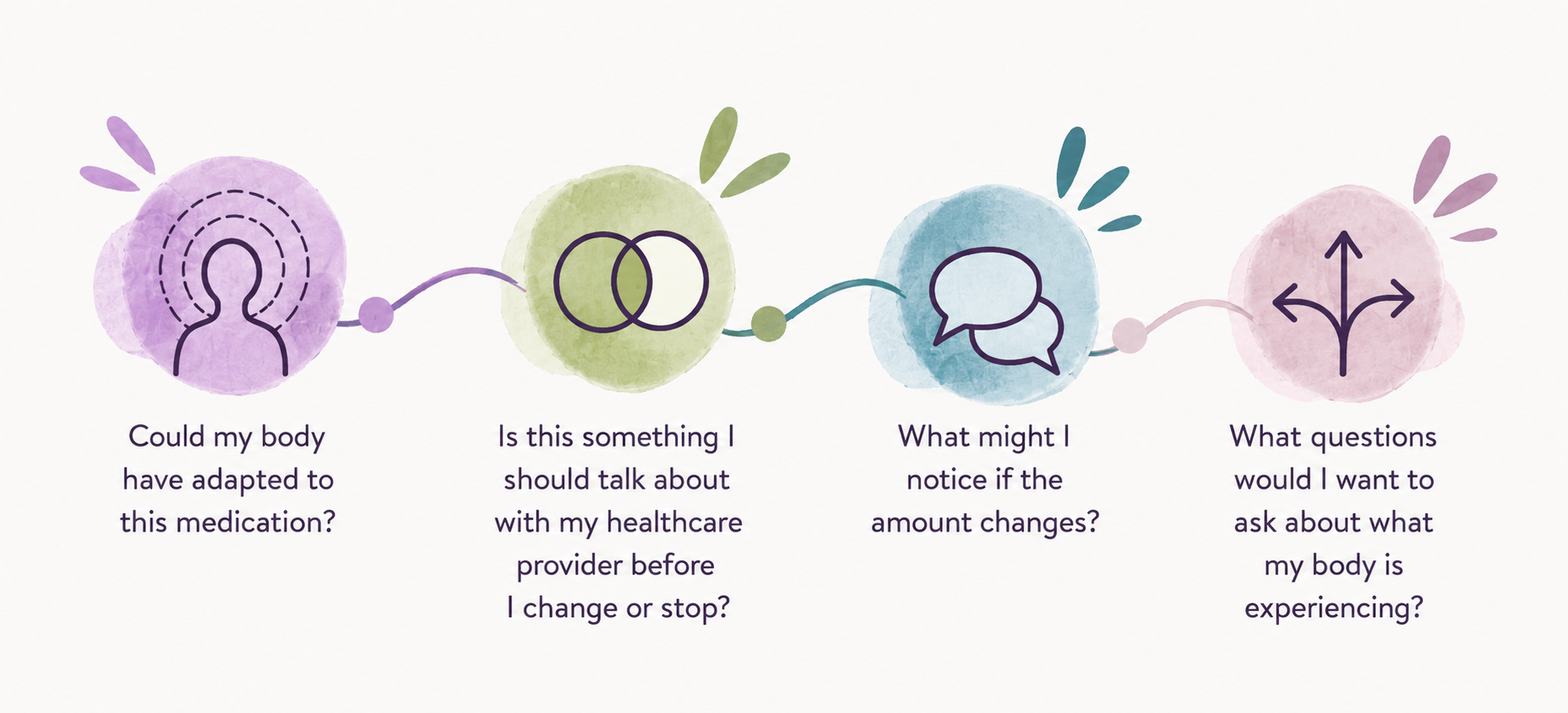
It gives us better questions to ask.
If you take something regularly you do not need to diagnose yourself or decide that something is wrong. You can simply know that physical dependence is something bodies can develop and that changing or stopping some substances can affect the body
QUESTIONS TO CONSIDER
TAKE THIS WITH YOU
Physical dependence tells us that the body has adapted.
It does not, by itself, mean that someone has a substance use disorder.
Understanding the difference gives us better information about our bodies and better questions to ask about our health.
A QUESTION TO CARRY WITH YOU
If my body has adapted to something I take regularly, what would I want to understand before I change it?