
A CLOSER LOOK
Why Does Our Thinking About Medications Change Here?
Looking at medication through a different lens
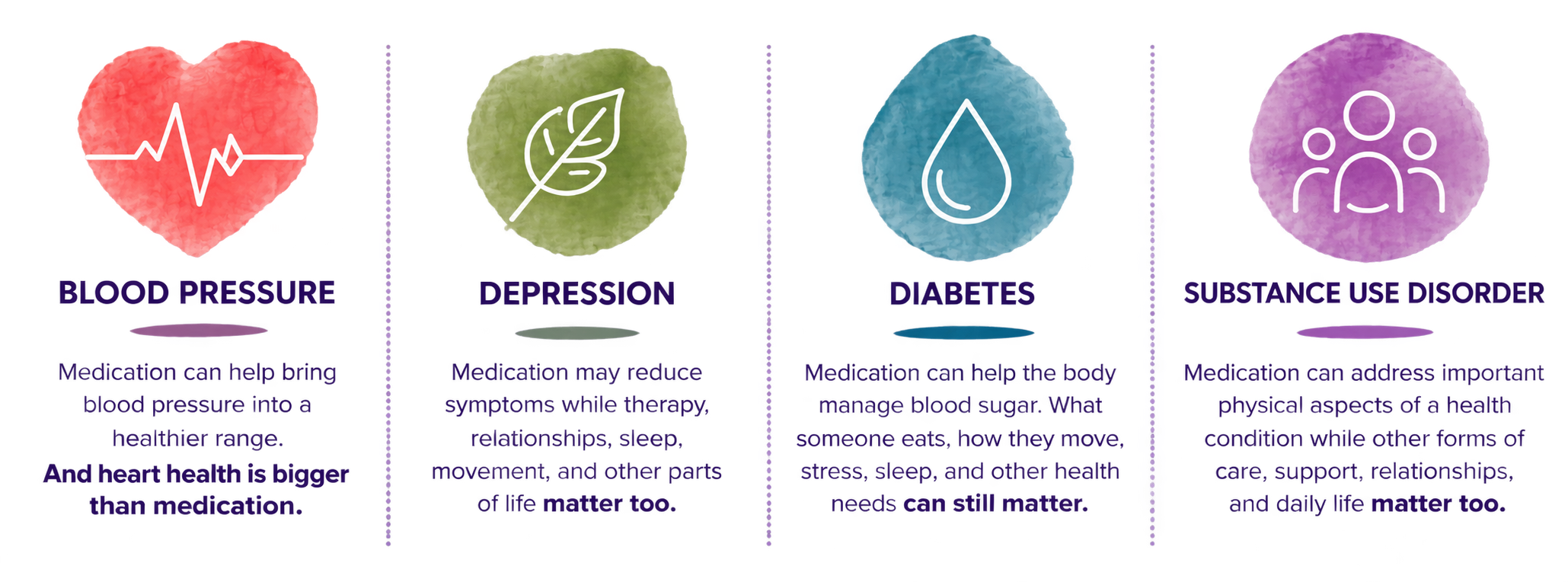
Medication can lower blood pressure, steady a mood, control blood sugar, relieve pain, or help us sleep.
We understand that as healthcare.
So why can medication feel different when the health condition is substance use disorder?
START WITH WHAT WE ALREADY KNOW
Medication can do different jobs.
We use medication for all kinds of reasons. Sometimes it replaces something the body needs. Sometimes it changes how a system in the body is working. Sometimes it reduces symptoms enough for other parts of care to work better.
We don’t usually expect medication to do everything.
We expect it to help with the part it is designed to help.
NOW LOOK AGAIN
The health logic did not change. Our category did.
When the condition is substance use disorder, medication can suddenly be treated as evidence that someone is not really getting better.
But medication does not stop being healthcare because of the condition it treats.
For opioid use disorder, medications such as methadone and buprenorphine are evidence-based treatments. They act on the same brain systems involved with opioids, but when appropriately prescribed, they can reduce withdrawal and craving and help create stability. Dr. Greg Hobelmann emphasizes that the evidence supporting these medications is extensive.
The better question isn’t whether medication “counts.”
It’s what the medication is treating and whether it is helping.
A CLOSER LOOK AT THE SCIENCE
What is the medication actually doing?
Dr. Kelly Dunn offers a useful way to understand it.
With opioid use disorder, withdrawal can become powerful enough that avoiding it begins to drive continued use. Medications can address that physical part of the condition, making it possible to turn attention toward other things that matter: health, relationships, work, mental health, and daily life.
Medication is an option, not a test of recovery.
Some people with substance use disorder use medication as part of their care. Some do not. Even among people who use medication, the right medication, dose, combination of care, and length of treatment can differ.
That individualization matters. What works for one person does not establish the path everyone else should follow.
WHY INDIVIDUAL EXPERIENCES MATTER
THE SAME TREATMENT WON’T FIT EVERYONE
Some people with substance use disorder use medication as part of their care. Some do not. Even among people who use medication, the right medication, dose, combination of care, and length of treatment can differ.
Dr. Mishka Terplan describes medications for opioid use disorder as safe, effective, evidence-based care that can be a critical part of recovery for many people.
Someone else’s treatment does not have to look like ours to be legitimate healthcare.
NOTICE WHAT CHANGES
Try putting the conditions back into the health picture.
If this medication treated a different health condition, would I think about it differently?

Am I judging what the medication is called, or asking what it actually does?

Could someone’s treatment be working even if it looks different from the treatment I expected?
These questions don’t require us to decide what treatment another person should receive.
They simply help us apply the same curiosity to substance health that we already bring to other areas of health.
TAKE THIS WITH YOU
Medication doesn’t become less medical because of what it treats.
For some people, medication is an important part of treating substance use disorder. It can address specific parts of the condition and create more room for other parts of health and life.
Good care is not about proving there is one right way. It’s about understanding the options and finding what helps a particular person get healthier.
A QUESTION TO CARRY WITH YOU
What might we stop noticing once a medication becomes part of everyday life?